Showing posts with label POTS. Show all posts

Friday, April 8, 2016

The Week That Was, April 8th


I guess I didn’t manage to do any weekly updates in March either so here’s hoping I can do a few in April at least.

-I’m finally starting to feel a little better. I’m climbing out of the longest rough patch I’ve ever had but I’m starting to be able to do a little bit of exercise again and it’s been multiple days since I’ve had to spend part of the day in bed. Woo hoo for a little verticality! The view from my couch is always better than the view from my bed for sure.

I shirked all responsibility this week since I’ve been feeling better. I didn’t prepare for appointments, make appointments, work on my applications that needed to be finished, etc. I just enjoyed the feeling of functionality a bit and put it all off.

It was lovely.

- Yesterday, I shared a sponsored post that’s been in the works for some time. Someone from SaltStick contacted me a few months ago about doing a partnership and I debated it for awhile. I have no plans to monetize this blog. That’s not the direction I plan on going but since I’ve used their product every day for years now and I have found that many with Dysautonomia have never heard of it, I thought it might be a good idea. The best part about it is they offered everyone (in the US at least) a coupon code to try the product. Check out the post and find the code.

Even my husband uses their product since they were created mainly for athletes in mind. He takes some before he does a hike or when he goes to Tough Mudder events.

-I found out about a month ago that one of my poems is going to be published. I submitted some stuff last minute to my alma mater’s literary journal and had no expectation that anything would be accepted. I’ll share the poem when the journal is released, which should be in the next few weeks. They have all the authors participate in a reading but I had to decline to attend. I would love to have gone but going to an event like that isn’t in my realm of possibilities right now. Maybe someday.

- Monday is my mom’s birthday. This week marked 6 months since she passed too. When I spent much of the last month in bed, I had to put the grieving process on the back burner. I just couldn’t face it when I was drowning and desperately trying to swim back to the surface. I had planned on going to the convalescent home where she lived and did hospice care to play their piano on that day. I haven’t played there since before Christmas. I would like to play there once a month at least but I haven’t been well enough to do that. I’m not sure I’ll go that day. I might end up crying more than playing. I do want to go soon though.

I’ve been playing my keyboard almost every day again and I’d love to go make an offering of music in her honor. She loved Elton John so there’s one song I’ll definitely be playing, which is at the end of the post.

-I have a really unpleasant pulmonary test next week that I am NOT looking forward to. It's a pulmonary function test. Luckily, I’ve done this test before so I at least know what to expect. It’s at the hospital a few towns over. I’ll have to breathe hard into multiple tubes for about an hour, which is brutal. I did this test a year ago and this should determine if my respiratory muscle weakness has indeed worsened, which is definitely feels like it has.

Compared to a year ago when I did the test, I’m on a higher dose of Mestinon now and I use multiple inhalers every day. Even with these, I struggle to breathe every day. I have to limit how much I talk and I had give up singing completely because it always ends in disaster. My soul feels incomplete without singing but I’m hoping someday to do it again. When I can, I’ll be able to perform again. 

The respiratory weakness is my most difficult symptom to manage by far so I’m hoping when I finally start immunotherapy that there will be some improvement. My quality of life would improve immensely if this symptom wasn’t so severe. Unfortunately, it's the most dangerous Myasthenia symptom because you can slip into Myasthenic Crisis at any time, which is why I have to be so careful every day.

I just want to get this test over with.

-Speaking of Myasthenia, an article popped up in my alerts that discusses the potential discovery of new antibodies associated with Myasthenia. It is extremely challenging to diagnose. Some test negative for the current antibodies associated with the condition and this leads to delays in diagnosis and treatment. This has been the case for me. My neuro at Stanford told me I likely have one of these undiscovered antibodies. The longer treatment is delayed, the more permanent damage Myasthenia does to the body. It's been years since my symptoms started and I still haven't started treatment. It's good to know that research is ongoing for the disease and there's hope that people will have access to a diagnosis and treatment sooner! 

-I have some great news to share. If you’re on the Facebook page, I already mentioned it there. I’ve discussed many times on the blog that I’ve been in a long, grueling battle with my private disability insurance for the remainder of my short-term disability. After two years and multiple appeals, I found out a week ago that I won my case! We didn’t think I had a chance in hell since multiple law offices declined to take my case and winning any disability appeal is nearly impossible without legal support.

This was my last appeal so I was waiting for one last denial letter. Then I’d set it on fire, shake my fist, and shout some expletives and move on with my life. That was the game plan. Then they called me and told me I won my case. I’m still in disbelief. It's not a monthly payment or a permanent disability unfortunately. It's just a lump sum of a few remaining months of my short-term disability, which the insurance company denied me. I'm in the process of applying for state disability right now.

A few people have asked me to share what strategies I used to win my case. Since my disability was through a private insurance company, the process was different. That’s why I couldn’t find a lawyer. Very few take private disability insurance cases. An office in Texas almost took my case but they ultimately declined. I will write a post soon sharing some of the knowledge I gained from this process soon.

It’s a huge victory since I spent an unbelievable amount of time and energy on all of my appeals over the last two years. What a relief.

I bought myself a fancy new record player as a reward.


I hope all of you are well out there!


Thursday, April 7, 2016

Sponsored Post: "Why Salt Can Help Alleviate Symptoms of Dysautonomia"

Today's post is a partnership between Kind of Broken blog and the makers of SaltStick. This is my first sponsored post and I decided to share this post with you because I have used their product every day for years now. I wouldn't have agreed to this partnership if I didn't believe in the product. Enjoy this informative sponsored post and some of my comments at the bottom:


"As most readers of Kind of Broken probably know, Dysautonomia is an umbrella term for autonomic neuropathy, meaning the autonomic nervous system (ANS) does not function correctly, reducing the effectiveness of nervous signals between the brain and other organs including the heart, pupils, intestines and blood vessels. This is why Dysautonomia patients often suffer from symptoms such as low blood pressure, rapid heartbeat, tunnel or blurry vision.

One common manifestation of Dysautonomia is known as postural orthostatic tachycardia syndrome (POTS), which occurs when the ANS cannot compensate for changes in body position. Thus, standing is usually accompanied by rapid increases in heart rate and a drop in blood pressure.

The link between low blood pressure and severity of POTS symptoms has been heavily explored by the medical community. However, the advice to consume ample amounts of water and salt to increase blood pressure and relieve symptoms hasn’t changed much over the years.

Here’s a little more detail on why salt can help alleviate symptoms of Dysautonomia:

The link between POTS and low blood pressure:

As we said above, the medical community has heavily explored the relationship between POTS and low blood pressure. Currently, there are three main theories:

      I.        As described by a 2012 study published in the Journal of Geriatric Cardiology, the act of standing causes blood to pool in the legs and feet, due to gravity. In a healthy person, the heart rate will increase slightly and the peripheral blood vessels will constrict to keep blood in the upper body. This response depends, in part, on the ANS. In a Dysautonomia patient, the nervous system does not properly activate these changes in heart rate and blood pressure, and all the blood will remain in the patient’s legs and feet, resulting in lightheadedness upon standing. Bottom line: An impaired ANS prevents the body from responding to changes in position that require increases in heart rate and blood pressure.

    II.        Another theory, suggested in a 2005 American Journal of Physiology paper, states that POTS symptoms are due to an overreaction to changes in the baroreflex mechanism, which is responsible for regulating blood pressure to the brain and other organs. The 2005 paper found that POTS patients’ bodies have an exaggerated response to changes in the baroreflex, which could result in increases in heart rate. Bottom line: POTS patients’ bodies do not properly respond to the baroreflex mechanism which helps regulate blood pressure.

   III.        A third theory (published in a 2005 Hypertension paper) suggests that the genes responsible for regulating nitric oxide are underrepresented in POTS patients. Nitric oxide helps regulate blood pressure and also contributes to the release of noradrenaline, which is the main neurotransmitter for the cardiovascular system. Thus, impaired nitric oxide release undermines the systems that regulate blood pressure and heart rate in POTS patients. Bottom line: POTS patients suffer from impaired nitric oxide production, which hampers blood pressure regulation.

As you can see, there’s no consensus about what exactly causes the low blood pressure in POTS patients. Regardless of the initial mechanism, the treatment seems to be the same: Drink a lot of water and eat a lot of salt. In the next section, we’ll explore why this helps alleviate symptoms.

Why salt increases blood pressure:

Like nearly everything in the body, blood pressure is maintained through a balance of water and certain key minerals, one of which is sodium. This balance is, in part, regulated by the kidneys.

Blood contains water in addition to many other elements, including blood cells, minerals and nutrients. Whenever there is too much water in the blood, the kidneys work to remove the excess and send it to the bladder to be excreted. The process of removing extra water relies on a balance of sodium and potassium, which work together to pull the water across the walls of your blood vessels through osmosis. This process has been examined extensively in medical literature (American Journal of Physiology, 2006; American Journal of Physiology, 2012; Nature Reviews: Nephrology, 2012; Journal of Human Hypertension; 1996).

When you consume a lot of sodium, without consuming a similar amount of potassium, this balance is thrown off, and the kidneys cannot pull enough extra water from the blood. This results in a greater volume of water in the blood stream, which puts pressure on the walls of your arteries and veins, thus raising blood pressure. In a healthy person, this would be a bad thing, but in a POTS patient suffering from chronically low blood pressure, this is ideal.

A caveat: Why it’s important to create an imbalance: The link between sodium and chronically-high blood pressure is hotly contested, partly because one of the most effective methods to counter high sodium intake is to correspondingly increase potassium. The American Heart Association recommends an intake of 4,700 mg of potassium per day, and notes on its website that “potassium is important in controlling blood pressure because potassium lessens the effects of sodium.”

Again, it comes down to the balance of sodium and potassium. If a healthy person consumes too much sodium, which throws off the sodium/potassium balance in the kidneys, causing an increase in blood pressure, that person simply needs to consume more potassium to restore the proper ratio. Of course, in a POTS patient, raising blood pressure to normal levels requires an overconsumption of sodium relative to potassium. Otherwise, the balance is maintained, and blood pressure remains too low.

Takeaways: How to apply this knowledge:

Now that you have a greater understanding of the role salt plays in helping to relieve symptoms of Dysautonomia, we’d like to provide a few steps you can take to put your knowledge into practice.

Eat a lot of salt. This one is pretty obvious, but it’s worth repeating the common advice to consume more salt, which is about 40 percent sodium. Exact recommendations vary, ranging from seven to 15 grams per day. Either way, it’s far less than the American Heart Association’s recommendation of approximately 3.5 grams. The bottom line is that you want to consume more sodium relative to potassium in order to keep blood pressure at normal levels. If you’re consuming the recommended 4.7 grams of potassium per day, you’ll need to really increase the table salt.

Try SaltStick. Of course, all that salt in your food can sometimes be … a lot. Salt has a distinct taste, and it can sometimes get tiring to consume savory foods all day long. SaltStick, which contains 215 mg of sodium in each capsule, may help. There are two major benefits to consuming SaltStick for POTS patients:

      I.        It doesn’t taste like salt. SaltStick Caps are flavorless and easily digestible. Commonly used by endurance athletes exercising in the heat, SaltStick is formulated to enter the bloodstream with as little resistance as possible -- either from flavor or absorption in the stomach. If you are tired of the flavor salt adds to your food, consider supplementing with SaltStick instead. Note that SaltStick is also non-GMO, vegetarian, gluten-free and does not contain any sweeteners such as high-fructose corn syrup. Just the electrolytes you need, in a form your body can easily absorb.

    II.        It provides more than just sodium. Remember, most physiological processes rely on a balance among minerals in the blood. “Salt” and “electrolytes” are both umbrella terms for several minerals, including sodium, potassium, calcium, magnesium and chloride. All of these minerals are important for a variety of functions, only one of which is blood pressure, and consuming nothing but table salt will mean you’re missing out on the other key electrolytes. Because SaltStick contains all of the above electrolytes, you can be sure you’re getting everything you need. This is especially important, given that more than 60 percent of men and women consume less than the recommended daily amount of magnesium, and more than 50 percent do not consume enough calcium.

But wait! Doesn’t SaltStick contain potassium? It’s important to remember that POTS patients want to over-consume sodium relative to potassium. Given that one SaltStick capsule contains 63 mg of potassium, it may seem counterintuitive to use SaltStick as a method for increasing sodium intake. However, this should not be a cause for concern, as each capsule contains more than three times the amount of sodium than potassium.

SaltStick is designed to mimic the profile of electrolytes contained in sweat, which results in a 215 to 63 ratio of sodium to potassium. For the endurance athlete exercising in the heat, consuming this much sodium in relation to potassium is not only acceptable, it’s recommended because this athlete needs to replace electrolytes lost through sweat. SaltStick is not recommended for sedentary individuals precisely because capsules contain levels of sodium that only make sense if you’re sweating in the heat.

However, for the POTS patient who wants to over-consume sodium, SaltStick may be ideal precisely for the reasons listed above, and the inclusion of potassium in each capsule should not be of concern because of the high levels of sodium.

Conclusion

We hope we were able to shed some light on why salt can help relieve symptoms of Dysautonomia. By consuming high amounts of sodium, relative to potassium, patients can raise blood pressure to normal levels, which can help counteract the lightheadedness and other negative symptoms.

If you are tired of salting your food, supplementing your diet with SaltStick Caps may help because each capsule is flavorless and also provides additional electrolytes that keep your body functioning properly.

Important Note: The above should not be construed as medical advice. Contact your physician before starting any exercise program or if you are taking any medication. Individuals with high blood pressure should also consult their physician prior to taking an electrolyte supplement. Overdose of electrolytes is possible, with symptoms such as vomiting and feeling ill, and care should be taken not to overdose on any electrolyte supplement.

Image source: pixabay.com 


SaltStick has offered a discount code for Kind of Broken readers. Use the code "KIND25" and it is good for 25% off all products bought through our online store at shopsaltstick.com. Note that it only applies to customers in the U.S., and it will expire April 30, 2016."


My Comments: 

One of the first suggestions you'll hear when you get a diagnosis of Dysautonomia is to increase your salt intake. It takes some trial and error to find the best way to do this because each person's presentation of the condition is different as well as our tastes. Since there are many other electrolyte products out there besides SaltSticks I wanted to make sure there was information that would compare the products, which is provided in the chart above. 

Many in the Dysautonomia groups I'm in use ThermoTabs, which are cheaper. I haven't tried those. I've only ever used SaltSticks and I've had success with them. I'd love to hear your experiences with other electrolyte tablets or other salt products. 

You can also read my post here I wrote awhile ago discussing some of the other products I use to try to reach the recommended high salt intake for Dysautonomia patients.

Increasing your salt intake is just one piece of the puzzle in managing Dysautonomia symptoms. Dysautonomia International lists many different strategies for managing the condition that are useful. Since Dysautonomia presents uniquely in each individual, it's important to find what works best for you. 

I hope this information has been helpful and I'd love to hear what other strategies you use to get more salt in your diet.

Happy salt-loading!


Friday, February 5, 2016

Some Goals for 2016


I meant to get this post up in December or at least a few weeks ago, but this post is a compliment to my post where I outlined what a typical good day looks like. I spend much of my time coordinating my care, resting, and working around my symptoms. I make weekly goals in my planner every week and then prioritize them, always making exercise number one no matter what else is going on that week. The rest of my goals usually involve phone calls, paperwork, appointments, etc. Thus, my life often feels like it boils down to constant management of my own health. I need a reminder to focus on life and my other goals.

I made this list in December and strategically left out my health-related goals because I’m trying to find a way to carve out a life, or a semblance of a life, outside of illness. I would say that the last few years, illness has controlled my life no matter how much I try to make it the other way around.  I like to believe I’m the captain navigating these rough waters, but often I’m really just the vessel plodding along in the storm. I have surrendered to the fact that illness is a constant source of chaos but it doesn’t mean I can’t at least attempt to make a life in conjunction with that chaos. This is what I’m telling myself at least.

My BFF Carrie Anne has an enviable Life List and she inspired me to make one a few years ago. It’s funny; I actually recently went back and looked at the one I made, which is from my pre-sick life, and I put things like “hike Yosmite’s Upper Falls,” “go whale watching,” and “publish more academic articles” on there. Uhhh….not quite. I’ll have to start from scratch at some point on it. 

But here are some goals I think I can manage this year:

1. Get Back to Creativity
Whatever your passion or skills, creating and the desire for self-expression are the essence of our humanity. I have always been artistic but I lost some of that creative spirit when I became an academic and while dealing with illness. I used to play music regularly, even getting paid gigs for weddings or at restaurants. I worked as a children’s illustrator for years at our local library. I was constantly creating and producing. This is my number one goal for this year: do something creative every day.

I’ve been playing my keyboard almost every day for a few months now so I’m on track with music. Even though I cannot perform right now (which was always my motivation to keep practicing), I’m working on learning and memorizing new material and trying to improve. I’m hoping to try to focus more on writing, finishing, and recording my own material. That’s at the top of my list for my creative goals.


I dream of getting back to painting and giving friends and family gifts of artwork regularly. I dream of sitting in my yard and drawing for 10 minutes at a time and taking breaks. Honestly, working as an artist for so many years put a damper on my desire to create my own artwork. As with all creative pursuits, it takes commitment to improve as an artist and develop skills. I have not been committed to painting for many years. But I still desire to do it more consistently.

I have some clear writing goals. I’m working on getting at least one blog post up a week, getting more writing published, and working toward writing my book. I got six posts up last month, so I’m already on my way toward reaching some of my writing goals.

2. Go Outside
I try to remember what pre-sick life was like and what I did every day in those years, and I would not describe myself as necessarily a home-body then. Yet, since I’m home-bound now, I don’t even leave the borders of my own home with any frequency. The boundaries of the world I inhabit now can be measured in mere feet. There is no literal or figurative horizon to look out to and build dreams on. My horizon is now internal.

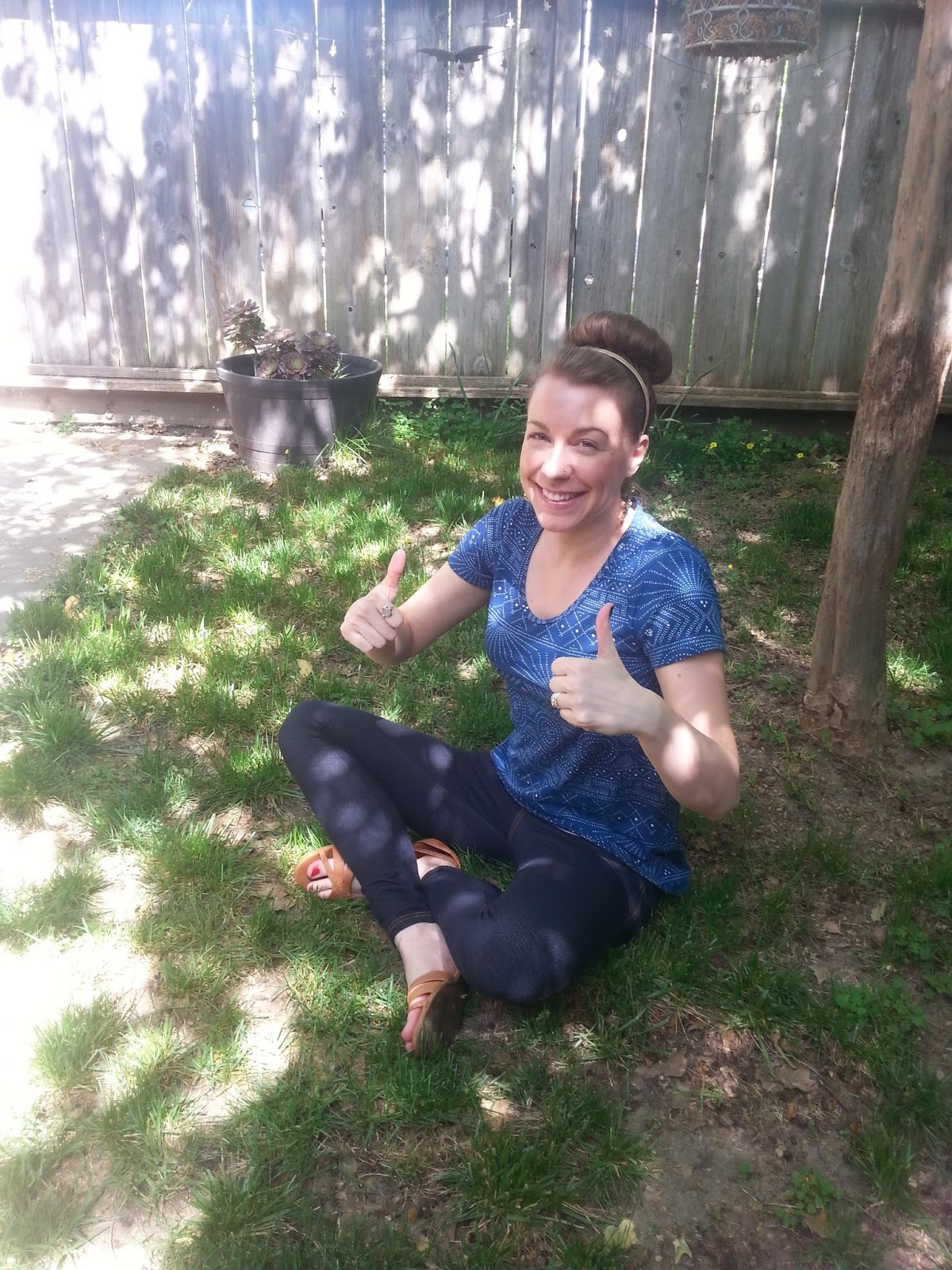
We live in a duplex that has an enclosed yard and that was the main reason why I wanted to live here. I try to sit outside in our yard every day. It’s difficult during the warm months (which is most of the year here), but I try to time it right each day to get outside even just for a few minutes. I try to walk with my trekking poles regularly (I’ve had limited success with this in the last few months unfortunately). My goal this year is to get outside every day. 

Along with meditation, this is fundamental to my mental health and sense of well-being. Getting outside, even just sitting in our yard, helps me feel like I am part of the world and feel less trapped. I talk to my cats and the birds in our yard and watch the flowers bloom. It’s glorious.


3. Listen to more music
This is separate from number 1. Since I have to spend so much time resting, it’s a good opportunity to listen to music, yet I honestly spend much of my resting time either reading the news, watching documentaries, or staring off into space. I’ve been anxiously waiting for the full swing of the election season so I’m already spending too much focusing on it. I’m not very interested in football or baseball. The World Series or the Super Bowl are barely a blip on my radar. Politics is my sports.

But music gives me more joy than almost anything else, so I would like to disconnect more and just listen. Listen to all the new music from my favorite artists I haven’t listened to yet. Listen to some of my records I haven’t listened to in ages. Just listen.

4. Read more
I wrote a post a few weeks ago that listed the books I had finished in 2015. I finished 20 books but I’m aiming for 30-40 this year. I know I’ll likely never get back to the 50-70 I read when I was an academic but it will feel close enough.

5. See more of my friends and family
Even though I don’t get out much, I see some of my friends somewhat regularly. But I want to see more of them and see more of my family. The last few years have not been kind to my family and our relationships suffered significantly under the strain of my mom’s failing health. I have high hopes that we can start to move forward this year. I want to see more of my husband’s family too, especially my crazy nephews.

I’d love to be able to drive again. That would make a huge difference with being able to see family and friends more often. Hopefully at some point I can do that again.


6. Work on projects with husband
My husband is a builder and maker of things but the times I have participated in his projects have been slim to none. I have a gorgeous 1920s antique armoire that my mom saved for me that desperately needs to be refinished. It’s been sitting in our garage for three years and I can’t wait to see it back to its full glory. It’s a serious undertaking but husband is on board to help with it.

We have some other projects on the table. We ordered a flint-knapping kit last year and have been waiting for some warmer weather to practice making hand axes. We can party like its 10,000 BC and make some prehistoric tools. Sounds fantastic.

This could come in handy in the zombie apocalypse

7. Travel (i.e leave the house for things that are not appointment-related)
I sometimes think about what my life would look like if illness hadn’t taken it over. I’d still be a workaholic and spending much of my time working, but I’d also be playing music and travelling. I have always loved to travel. I honestly cannot remember the last time I left my town for something other than an appointment, even just to go to neighboring towns. One of my BFFs moved to the next town over a few years ago and I still haven’t seen her new place. My sister moved to the Bay Area a few years ago and I still haven’t been able to visit her there yet either. It’s just absurd.

I want to attempt to venture out this year. ‘Travel’ for me doesn’t mean I’m going to travel up the Pacific Northwest (though I’d give anything to do that again). It means going places that are nearby, even just a mile or two down the road, and the excursion NOT being appointment-related. I’m going to actually count any activity where I leave the house that isn’t for some kind appointment as “travelling.”

There are places I really want to go that are not that far from us but would take some serious planning to pull off, including having to stay overnight. I haven’t been to Yosemite in 3 years, which considering we used to go there multiple times a year, is desperately sad. I’d love to take a trip to Monterrey and go the aquarium. We both love the Foothills and had family in Sonora when we were growing up. Ultimately, our goal is to move there, but I’m hoping this year I could pull off a day trip there again. If I can start slowly working my way up to these things, maybe we could finally get back to thinking about our bigger travel plans like visiting my husband’s aunts in southern California again or finally making a trip to Yellowstone. Someday.


8. Meditate more
I had a great therapist when we lived in Nevada who had a background in mindfulness, and she helped me get back to meditating. I used to do a lot of yoga years ago and meditation was always part of that practice. I would like to consistently meditate again, preferably once a day. I have found that morning is the best time for me, and I have actually discovered that it helps to stabilize my heart rate and breathing. I usually wake up with my heart rate around 160 (thanks POTS) and struggling to breathe (thanks Myasthenia), but sitting and focusing on my breath helps to improve these symptoms that are usually the worst in the morning. But more than anything else, meditation offers benefits for mental health. For me, it has improved my anxiety significantly and helped my depression too. When I feel myself starting to spiral out of control mentally, I try to sit still for a few minutes and just focus on my breath. It really helps.


And just for fun, here are some big dreams and goals—some I’m actually working toward and some that are just crazy ideas I want to throw out to the universe:

1.      Finish my album of originals and sell it or make it free online
2.      Write a book (or two or three)
3.      Perform regularly again
4.      Start a non-profit that will help disabled chronically ill patients get access to important resources
5.      Travel to the UK
6.      Be able to drive to my friends/family’s house and be able to drive myself to local appointments
7.      Organize fundraiser events (for Dysautonomia, Myasthenia Gravis, and Alzheimer’s)
8.      Be able to teach in a classroom again (or any capacity really)
9.      Take freelance writing jobs
10.  Have a vegetable garden that I am able to maintain
11. Go camping
12.  Get an MFA or finish my PhD
13. Sell some of my artwork or give it away for free

I don’t know if I’ll accomplish any in this last list but these goals beckon to my soul for completion someday


I recommend making a list for yourself also, making sure to separate the health goals from your life goals. Even as I was writing this, I kept finding myself listing health-related desires. This was a good exercise to try to delineate my own desires from the health-related goals I’m working toward every day. We have to remember to live sometimes, even if much of that life has to be lived internally. There are still universes within each of us that deserve exploration.


Friday, January 29, 2016

The Week That Was, January 29th

The good patch I had earlier this month has definitely ended and the last two weeks have been pretty rough. I’m having trouble sleeping, eating, and breathing (along with the usual standing and walking). I keep thinking “how did it get so hard to just be a human being?” It’s pretty absurd. Aside from these obvious things, my spirit is strong right now, stronger than it has been in a long time. I hope that lasts awhile.

-I finally saw my GI doctor last week for the first time in a year and a half. Last time I saw him, I explained that after all the trial and error we went through to manage my Dumping Syndrome, all the prescriptions we tried that failed, my GI issues were starting to stabilize since I had stopped working and started using imodium every morning. The GI issues are still my most difficult Dysautonomia symptom to manage but not working has made a huge difference in managing it. When I told him this, he basically broke up with me: “just call me when you need me.” I had finally got back to my normal weight then. It was such a struggle to keep weight on while I was working.

I kept that weight on for a good year. Sadly, since I’ve had an intestinal infection the last few months I’m back to the weight I was when I was working, which feels like failure. I’ve lost about 10 lbs. When I first got ill in 2010, I had an infection then also but I lost 20 lbs that time. Luckily, this has not been as bad. He gave me some awful liquid medication that’s cherry mint flavored (the horror!) and if that doesn’t work, I switch to an antibiotic. Hopefully the liquid medication will finally take care of it.

My medicine and husband's "medicine"
We should start a petition to stop pharmaceutical companies from adding awful flavors to medications. I can still taste the bubblegum amoxicillin my sister and I were always on when we were young. I'm sure that flavor stands out to so many people from their childhood. Awful.

-I finally got a hair cut! It’s been about 6 months. I had to cancel my appointment multiple times but I finally made it yesterday. It’s amazing how such simple tasks so many take for granted can be mountains to climb when you are ill. It’s been two years since I’ve dyed my hair and that’s my next goal. The prospect of sitting up in a chair for 1-2 hours is a bit daunting. Before I got ill, I got my hair done every few months. I have been dyeing it since junior high so I had no idea what my natural color even looked like. But when I started losing handfuls of hair and illness took over my life, it became a non-priority. I want to make it a priority again because even though I don’t get out much, it helps me feel better about myself.

Bella got a cameo appearance
Even though our energy is so limited, I think it’s important not to lose the rituals of self-care during illness. I know that when I look better on the outside than I feel on the inside that always gives me a boost of self-esteem, a jolt of determination to power through the physical symptoms.

-We have been watching my oldest nephew most Fridays now and his younger brother has been so disappointed that he hasn’t been able to come. He called my husband last week and said “Uncle Dave, can I please come play Mario and eat gummi bears with you?” So my sister-in-law dropped him off on Monday and we granted his wish. After we played video games, he requested to watch a movie and he asked to watch Harry Potter. I was so proud I could’ve shed a tear. So we watched the first movie and I taught him some Potter spells to recite with the wand my husband made me. It was a great day.


-Even though I haven’t performed in almost two years and I’ve had to stop singing because of Myasthenia, I’m still committed to improving as a musician. Music will always be my greatest joy. It also helps me escape the physical symptoms and just wade in a vast ocean of melody for a short while—until my energy runs out. One of my goals still is to learn or memorize at least one song a week. Nat Cole has been one of my favorite musicians for most of my life and sadly most people have no idea what an accomplished jazz pianist and organist he was. Many only listen to him at Christmas time. I really recommend any of his recordings he did with his trio. I’ve avoided learning one of his most popular songs, "Stardust," for years because it's so challenging, but I’ve been trying to tackle it. My sister loves this song so I’m hoping to play it for her sometime.


-Speaking of jazz, here’s something hilarious. Jazz is my favorite genre of music. It’s my heart and soul, but some of the stereotypes about the genre are admittedly deserved.  Comedian Jon Benjamin decided to make an experimental jazz album so he got a group of accomplished jazz musicians and joined them on piano. Except, he doesn’t know how to play piano. Hilarity ensues. What’s funny, is some of the music could actually pass. Miles Davis said there are no wrong notes in jazz, so I guess you have to give it to him. This really is jazz. I played it for husband (who does not share my love of jazz) and he laughed. Listen to that gorgeous song by Nat Cole above, and then take a listen to this and have a good laugh:


-This is my 6th post this month! That’s the most I’ve ever gotten up in a month so I’m feeling pretty good about myself. I’ve got more posts in the works and I’m hoping to get more interviews and guest posts up too. Stay tuned!


Some links from the week:  

Something long overdue: Lego created a disabled minfig

A new book that looks at the empirical research of “mind over matter.” I’ve added it to my must-read list for this year


My BFF Carrie Anne outlines some of her goals for the new year

A woman describes something so many of us know too well: her dangerous symptoms were dismissed by a doctor as “just anxiety.” A few days later, she had a heart attack.  Another example of the very real consequences of the gender bias in medicine

Friday, January 22, 2016

A Day in the Life


Instead of an update post this week, I have something a little different. My best friend Carrie Anne suggested I write a post like this and I thought it was a great idea. I outlined a typical day for me to show what managing illness looks like and what it means to enjoy life while battling life-limiting illness. This is what a pretty good day looks like, without any major catastrophes. I included a little of my thought process also. This is the Spoon Theory of illness in practice :

“It’s 9:00. I meant to wake up at 8:30. I set my alarm for 8:30. What happened? I didn't even hear my alarm. I always feel better physically if I can get up before 9:00. Oh well. I feel like I didn’t sleep. How many times did I wake up last night? Just the once or twice? I woke up when I heard husband leave at 3:30. Did I wake up because I wasn’t breathing? No. Not this time. Intestinal pain? Probably. I can’t nap so this will be as good as it gets today”

I get up and make the same breakfast I have every day: instant oatmeal with a scoop of peanut butter and extra salt. I had to give up any hope of eating real food in the morning a few years ago because my GI problems are the worst in the morning and I will instantly be lying on the bathroom floor if I try to eat real food. I’ve had a few disasters from trying to eat solid food and I'll just leave it there. I get most of the oatmeal down usually and my morning meds, which are my tachycardia med, Mestinon for Myasthenia (I can suddenly breathe again!), Florinef (oh how I hate thee but I cannot function without thee), imodium (food and I can be on speaking terms again), and a salt pill. 

I start hydrating as soon as I wake up and drink fluids (tea, water, V8, Nuun) non-stop until bedtime. That's what it takes with Dysautonomia. I do some of my vestibular exercises in the morning (standing still for 30 seconds and trying not to fall from the swaying). This is supposed to help counteract my balance issues, even though they aren't vestibular related. It usually helps slightly.

“I’ve been sitting here watching mindless television for an hour. I got my food and meds down. Do I attempt exercise? I could get on the stationary bike, or try to walk, or do some strength, or just meditate instead and try to exercise this evening? It’s a risk either way. I could waste all my energy on exercise and risk not being able to make myself lunch or be able to do anything else. I’m going to risk it. Exercise seems to be going better in the morning. I might not have any energy left this evening. I better do it now.”

I do one of those options but never push it too hard so that I have enough energy still left. The “exercise” I do is only 10 minutes or less and very minimal. As a former athlete and someone who has always been very active, it feels pathetic but I know it is still a huge success if I can do it and if the weakness/paralysis isn’t bad enough that I can get some use from my legs. With Myasthenia, the more you use a muscle, the more weak it gets and if I'm having a rough patch, the paralysis could set in for days or weeks. I have to be very careful with how much exercise or movement I do because my legs especially will completely shut down if I ask too much from them. Sometimes I end up spending all of my energy on exercising and sometimes I finish exercising feeling slightly invigorated with more energy. It’s a crapshoot every time. 

I put my compression stockings on (if I exercise, this happens first), get dressed, do my makeup, brush my hair (maybe curl it), and listen to NPR news. I may be home-bound now but that hasn’t changed my perpetual desire for news and politics. I need to know what’s happening in the world even if I’m barely part of it. I’m still a citizen of the world.

I usually waste copious energy on getting ready. This is a controversial subject in the spoonie community. I get dressed and do my makeup every day, even when I’m not leaving the house, and I willingly waste much energy on this. It is my war paint, it is my normalcy, and it is how I know the difference between ok days and horrific days. Horrific days are ones where I cannot get dressed or put make up on or leave my bed. It’s a dash of vanity too. I don’t want anyone to be able to look at me and see the struggle etched on my face.

My mother taught me so much about self-presentation and feeling good about yourself through that presentation. Even when we were destitute and she was a single mother, she always looked fantastic and had high esteem about her appearance. It’s something I still value even if I don’t leave the house most days. I like to know that if a miracle happens and I have enough energy to leave the house or if someone comes by, I will at least be ready.

I won’t feel the part but I’ll at least look it.

“It’s 11:30. I have a little time before the Big Crash comes. It’s just all downhill until I can take my afternoon dose of Mestinon at 4. So many hours from now. This is the worst time of day for me so it’s time to sit. Sit and rest. My to-do list still has so much left on it for the week. I have phone calls to make, appointments to set up, paperwork to fax, I have to talk to the disability insurance company again. I can’t believe I have to call them again this week. It never ends. There’s never a week where I don’t have to do something related to managing my own care. What if I took a week off? Maybe in June? A whole week where I don’t do any of this? Maybe.”


"Sit still. I have to make lunch somehow in an hour and I need to rest for that. I’ll make the phone call after lunch. After I use my afternoon dose of my inhaler. That way I won’t be gasping for breath once I get off the phone. The only way I can sit still is if I force myself to read or watch something. I’ll watch another episode of Time Team. I never get tired of Time Team. One episode is enough time to be still and rest before I have to make lunch. Do I have enough energy to make myself something besides the usual eggs I eat for lunch every day? It’s a nice thought. The pain in my intestines tells me that I shouldn’t risk trying to eat other food anyway.”

I watch an episode of Time Team, one I’ve probably already seen and have the dialogue memorized, or a documentary or live music on YouTube. Then I try to get enough energy to make myself lunch and maybe unload the dishwasher in stages. I take an hour to eat lunch, which is the amount of time I need for each meal. Because of the Dumping Syndrome related to Dysautonomia, I have to eat very slowly. That way I can get enough calories and the food has a good chance of actually staying in my body long enough to digest it. 

All cooking is done while sitting, of course!
“It’s 1:00. I guess I’ll make that phone call. Then I’ll sit outside in the yard for a bit. That sounds lovely. That will be my reward for getting this off my to-do list. The birds in my yard always hang out with me when I’m out there. They make me feel like Snow White, if Snow White was a crippled, recovering academic with a Zeppelin habit. I’ll read or work on some writing while I’m out there. Or just listen to music. Or read the news. Either way, it will help me sit still and rest. I’ll check Twitter and see what my friends and spoonie friends are up to, or what political nonsense is happening. Look at the sky. Feel good about life and my place in the universe at this moment.”


Husband gets home in the afternoon and we talk about how his day went. He lets me vent my frustration about American politics or whatever news I read. We laugh at some random thing we saw online or heard and banter about our nerd interests. Then he usually plays video games and I read or work on some writing for awhile.

As my morning Mestinon dose starts to wear off, the afternoon is a slow climb. It’s the worst time of day for me so I try to spend most of it resting. My inclination is to keep moving, try to clean, do things, so I really have to force myself to rest during the day. If I push myself, then I can end up bedridden and struggling to breathe and move. Then the day is completely over. It's a constant balance to try to stay mobile and active enough while resting significantly. By 4 PM I can take my afternoon dose and then things start to turn around a bit. I can breathe better, have more energy, and more use of my limbs. I can maybe try to go for a walk or do a bit of cleaning or play my keyboard for 15 minutes. Usually I keep resting. If I don’t eat dinner by 6 PM, I start crashing again.


Husband makes dinner most days. Cooking complicated meals is just not something I’m able to do anymore, so he does the cooking. But it’s a fair trade because I do all the clean up. I don’t mind doing that part. It feels like my contribution. I take my vitamins with my dinner since I have the best success with food at that time.

The evening is the best part of the day because that's our quality time. We usually eat our dinner and watch whatever Sci Fi show we’re currently watching. I also watch the news at 5:30 every day. We sit on the couch and watch our show with our cats and then husband goes to bed around 8:30. I go to bed later than him so sometimes I’ll go in and lie down with him for awhile. We’ll grab one of the cats and have a team snuggle for 15 minutes and then husband falls asleep.


I usually shower, a very quick, lukewarm shower with my shower chair as one with Dysautonomia must take. A hot shower is one of the worst things you can do with Dysautonomia because it dilates the blood vessels and your body is already having a difficult time keeping blood flowing to your heart and brain from blood pooling. Gravity combined with heat is Dysautonomia kryponite. That’s how one ends up unconscious on the shower floor, which is not sexy. Even with the fast, lukewarm shower while sitting on my shower chair, I can feel my brain start to turn off by the end of the shower so I rush through it. After I shower, I sit for a bit and rest. I can’t shower in the morning anymore unfortunately. If I do, it could take me all day to recover from it. Evening is usually a success.

Around 8 PM, I usually get my second wind or at least a small surge of energy. I usually finish the dishes if I haven’t already or try to do some of my very easy physical therapy exercises. In the summer, I sit outside and read since I can’t go outside during the day. I loathe summer now but eating my breakfast outside in the morning and then sitting outside in the evening and reading are both real treats. I look forward to that bit at least.

“It’s 9 PM so I have an hour or so before I take the next round of meds and start preparing for bed. Should I try to exercise more? No. I did enough today. I have to save some energy for tomorrow. Do I watch some crappy tv? Or read? Maybe I could try to mop? I’d give anything to mop. I need to invent a vacuum cleaner/mop that I could ride because I just cannot successfully do that now. I miss the days when I could clean our whole house in an hour. Now so little gets done. Thank god no one ever sees our room and bathroom. I need to learn to live with it. It’s not the end of the world. I did enough today. It was good enough.”

“Maybe I could try to drive tomorrow? It’s been almost a year. Maybe I could walk all the way across the street? It’s been so long. Maybe I could go somewhere with husband? I don’t want to get my hopes up. I’ll just take whatever my body throws at me and accept it. I had an ok day today so I just need to be satisfied with it."

"I didn't have to spend any time in bed, and that my dear is glorious.”

“But I need to sit and rest before bed. I should do my evening dose of my steroid inhaler now. I may need a hit of my rescue inhaler before bed since I’m not breathing great. Hopefully they’ll both be enough to breathe ok through the night. I don’t want to have to use them back to back right before bed. That will lead to endless coughing and could keep me up. I’ll use it now.”

Then I take my evening meds and try to get to bed before 11. I usually feel my best if I can get to bed by 10:30 and wake up around 8, but I’ve always been a night owl. I wish I could stay up later, but those are days are over. I lie in bed and read for awhile, my cat climbs up next to me, and then I eventually fall asleep to start the day all over again.


***
What I hope to show with this is a little of what it’s like to manage chronic illness day to day and a little of what it’s like for those who are so ill that they are home-bound. This is actually what an ideal day looks like, without having to spend any time in bed and accomplishing a few things. Perhaps I'll outline a really bad day sometime, but it won't be an easy read that's for sure. I hope I showed not just the constant battle of managing illness, but more importantly, what it means to live a good life despite it—what it is to attempt to thrive despite a body strained by affliction and in constant chaos. 

This wasn’t my normal a few years ago because I was working still. I left the house every day. I lived among the rest who have a career and a sense of purpose. But this is my normal now and I have adjusted to it. My sense of purpose has changed significantly and often that purpose is just to try to make the most of each moment, in the hopes that I’ll feel well enough to enjoy it fully. 

I never know what I will wake up to each day or how I will feel moment to moment. The day can vary so widely that it is often impossible to predict what I’ll be able to do. But no matter what the day becomes, I have learned how to feel satisfied with whatever I get and whatever I'm able to do. It's not an ideal life, but it is still a good life. A good life indeed.